Loading...
Serving Miami Beach, FL and surrounding areas. (645) 300-7263
Miami Beach Epoxy Flooring & Concrete Polishing is a concrete flooring contractor serving Miami, FL, with specialized experience in commercial epoxy systems, polished concrete, and surface preparation for the concrete block and stucco homes that make up most of Miami's residential neighborhoods, serving the city since 2016.
Miami's commercial corridors - from the warehouses near Miami International Airport to the restaurant and retail spaces in Wynwood and Brickell - need flooring that holds up under heavy use and regular cleaning. Our commercial and industrial epoxy systems are engineered for that level of traffic and are installed with the same moisture-management process we use across all South Florida work.
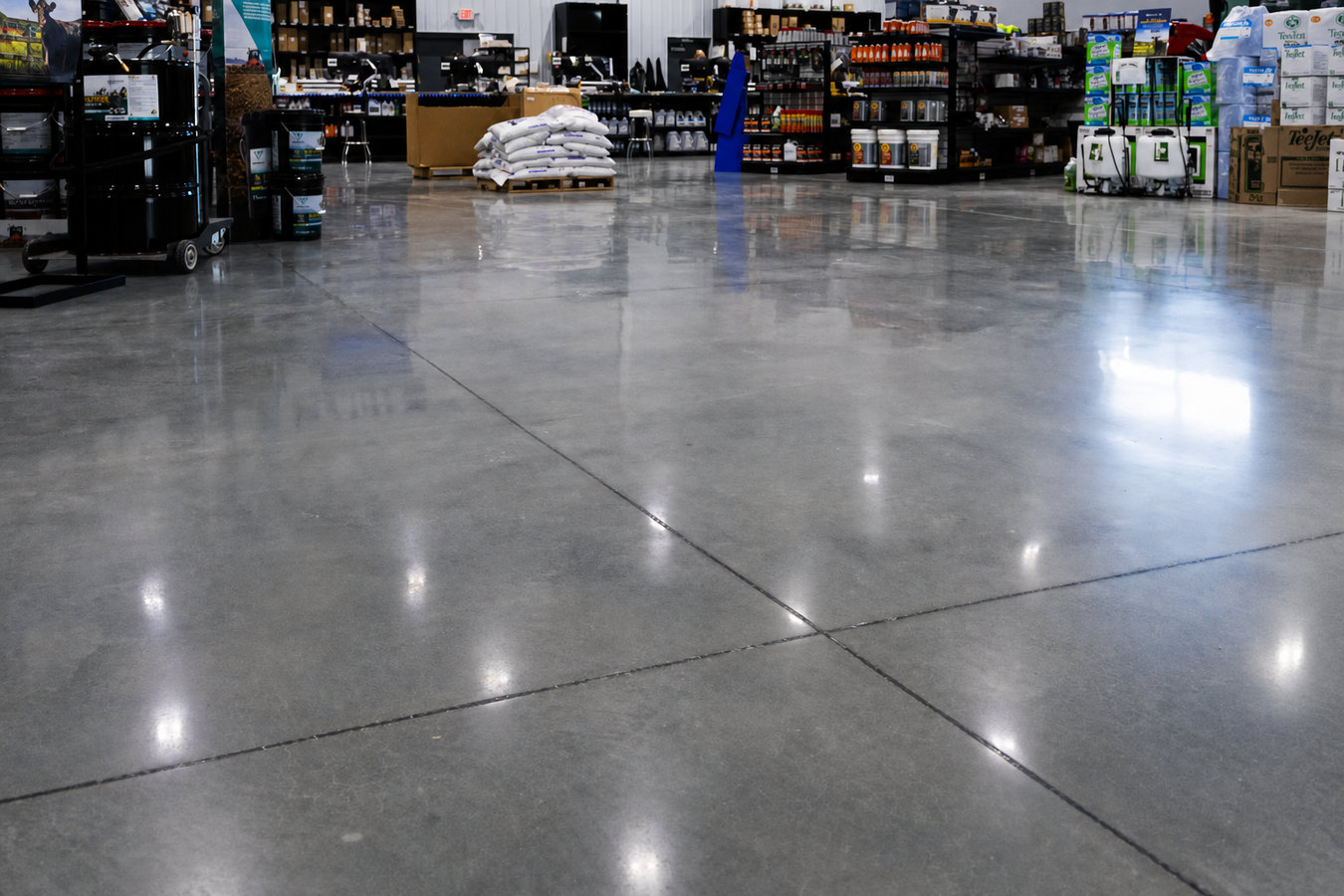
Older Miami homes in neighborhoods like Coconut Grove, Coral Way, and Flagami often have original concrete slabs that have never been finished beyond a basic sealer. Diamond-grinding and polishing brings those surfaces to a smooth, reflective finish that suits both residential renovations and the commercial loft conversions that have become common in Wynwood and Edgewater.
For single-family homes and duplexes in Miami's outer residential neighborhoods - Westchester, Kendall, and parts of Hialeah - a properly installed epoxy coating on a garage or utility room floor is one of the most practical investments a homeowner can make. These homes almost all use concrete block construction, meaning the slab is already there; it just needs proper prep and a quality finish to become a clean, low-maintenance surface.
Miami gets over 60 inches of rain per year, and slabs in older neighborhoods often show the effects - cracking, surface pitting, and spalling from repeated soaking and drying cycles. Resurfacing with a bonded overlay restores a flat, clean surface without the disruption and cost of full slab replacement, which is particularly practical for occupied homes and rental properties throughout Little Havana, Allapattah, and similar dense neighborhoods.
Miami homeowners close to the water - within a mile or two of Biscayne Bay - deal with salt air that degrades unsealed concrete surfaces faster than most people realize. A penetrating sealer applied to driveways, patios, and walkways slows that process significantly, extending the interval between repairs and reducing the ongoing maintenance burden on investment properties.
Miami's flat-roofed, concrete block homes built in the 1950s through 1980s often have attached garages or carports with raw slabs that have absorbed years of oil, water, and salt. A proper coating job on these floors starts with thorough grinding and degreasing, then applies a durable finish suited to Florida's year-round heat - not a thin paint-on product that will peel before the next rainy season.
The vast majority of Miami homes built after World War II use concrete block and stucco construction - locally called CBS, for concrete block and stucco. That building method makes Miami homes naturally durable in hurricanes, but it does not make the floors inside them immune to the city's climate. Miami sits at very low elevation, often just a few feet above sea level, and the city receives over 60 inches of rain annually - almost double the U.S. average. That combination of low elevation and heavy seasonal rain means ground-level slabs in many neighborhoods absorb and release moisture repeatedly throughout the year. Over time, that cycling causes surface deterioration, staining, and in some cases the kind of soft spots and cracking that make a coating job more complex than it looks.
Miami's commercial market adds another layer of complexity. The city has a large concentration of warehouses, food-service operations, and industrial spaces - particularly in and around the industrial corridors near Miami International Airport and the Port of Miami - where flooring needs to handle forklifts, chemical spills, and daily pressure-washing. Standard residential epoxy products are not built for that use, and applying the wrong system is a waste of money. Selecting the correct product for the actual conditions of each space is one of the most important things a contractor can do, and it requires knowing Miami's commercial environment, not just its residential one. Homeowners and property managers in Miami who want to understand permit requirements for more substantial floor work can consult the Miami-Dade County Building Department.
Our crew works throughout Miami regularly, and we understand the local conditions that affect concrete flooring work here. The city's neighborhoods vary significantly in both building age and building type - a condo in Brickell has completely different access conditions and slab characteristics than a mid-century single-family home in Flagami or a warehouse near the airport. We work across that range and bring the appropriate approach and equipment to each type of property.
Miami is a big city with long travel corridors - Calle Ocho runs through the heart of Little Havana, NW 7th Avenue is one of the main arteries through Allapattah, and US-1 ties together Coconut Grove, Coral Gables, and the South Miami neighborhoods. We know which routes work at which times of day, which neighborhoods have access constraints for larger equipment, and how to stage jobs efficiently in the tight lots and short driveways that are common throughout Miami's older residential areas. That logistical familiarity reduces delays and keeps projects on schedule.
We also serve neighboring areas including Coral Gables, which borders Miami to the south and has its own distinct housing stock of Mediterranean Revival homes, as well as Miami Beach, just across the causeway. If you manage properties in both cities, we can coordinate jobs across both areas under one contractor relationship.
Reach out by phone or through the contact form and we will respond within one business day. We ask a few questions about the type of space, its size, and whether there is any existing coating or visible damage - just enough to prepare for the site visit.
We visit the property at no charge, inspect the slab, and test for moisture. For Miami's older concrete block homes, we also check for old adhesive layers and surface contamination that affect prep time and cost. The written estimate we give you reflects what we actually found - not an optimistic number that changes mid-job.
Most of day one is dedicated to surface preparation - grinding, patching, and applying primer. Coating or polishing follows once the surface is correctly ready. We schedule work during cooler morning hours during Miami's wet season to avoid adhesion issues from heat and humidity.
We walk the finished floor with you before leaving, address any questions, and provide written maintenance instructions. Most floors are ready for light foot traffic within 24 hours and full use within 72 hours after the final coat.
We serve residential and commercial properties throughout Miami - from single-family homes in Westchester to warehouses near the airport. Free on-site estimates, response within one business day.
(645) 300-7263Miami is the second-largest city in Florida with about 440,000 residents within city limits and sits at the center of a metro area of more than six million people. The city is made up of dozens of distinct neighborhoods, each with its own character and building stock. Coconut Grove has tree-lined streets and some of the city's oldest homes, many in Mediterranean Revival styles from the 1920s and 1930s. Little Havana and Flagami are dense residential areas of smaller concrete block homes and duplexes, many built in the 1950s and 1960s. Brickell and Edgewater are dominated by high-rise condos built in the 2000s and 2010s. Wynwood has evolved from a warehouse district into a mixed-use neighborhood anchored by the famous Wynwood Walls street art complex.
The vast majority of Miami's post-World War II housing uses concrete block and stucco construction, driven by hurricane codes and the local climate. That building method is durable, but the slabs inside those homes still respond to Miami's heat, humidity, and seasonal flooding. Homes built before 1992 - when Florida significantly strengthened its building codes after Hurricane Andrew - often have aging materials that need more care than newer construction. The broader Miami-Dade County area, which includes cities like Coral Gables and Hialeah, shares many of these housing characteristics and we serve those communities as well.
Durable, high-gloss epoxy coatings that protect and beautify any concrete floor.
Learn MoreHeavy-duty epoxy systems engineered for demanding commercial and industrial environments.
Learn MoreTransform your garage with a tough, attractive coating that resists stains and wear.
Learn MoreFast-curing polyaspartic coatings ideal for quick turnarounds without sacrificing durability.
Learn MoreStunning metallic epoxy floors that create a unique, high-end decorative finish.
Learn MoreChemical-resistant urethane cement floors built for kitchens, breweries, and food facilities.
Learn MoreMirror-smooth polished concrete that brightens any space and lasts for decades.
Learn MoreRich, permanent color stains that give concrete floors a custom, one-of-a-kind look.
Learn MoreClassic terrazzo installations combining beauty, durability, and low maintenance.
Learn MoreMoisture-resistant basement floor coatings that turn unused space into livable area.
Learn MoreProfessional grinding that creates the ideal surface for any coating or overlay.
Learn MoreProtective sealers that guard concrete against moisture, stains, and daily wear.
Learn MoreRefresh damaged concrete surfaces with a fresh overlay at a fraction of replacement cost.
Learn MorePerfectly flat self-leveling overlays ideal beneath tile, LVP, or coatings.
Learn MoreSlip-resistant, UV-stable coatings that keep pool decks safe and looking great.
Learn MoreSafe removal of old coatings and adhesives to prepare a clean, bondable substrate.
Learn MoreMiami's mix of older CBS homes, high-rise condos, and busy commercial spaces calls for a contractor who knows the difference. Call now and we will schedule a free on-site visit - usually within a few days.